Rebound Risk: What Actually Happens When You Quit Propranolol Cold Turkey
Propranolol occupies an unusual place in American medicine cabinets. Unlike opioids or benzodiazepines, it carries no euphoria, no craving, no street value. Many patients therefore assume that discontinuing it is as simple as skipping a dose. That assumption is wrong — and according to cardiology guidance, potentially dangerous.
Not Addiction, But Real Physiological Dependence
The distinction matters. Propranolol does not create psychological dependence, so it is not a "controlled substance" and no one misuses it recreationally. What it does create is physiological adaptation. Over weeks and months of daily use, the heart's beta-adrenergic receptors upregulate — the body, sensing the drug's constant blockade of adrenaline receptors, builds more of them to compensate.
When propranolol disappears suddenly, all of those extra receptors are left wide open to the body's natural adrenaline and noradrenaline. The result is a surge of sympathetic activity that can exceed pre-treatment levels. Clinicians call this beta-blocker withdrawal syndrome, and it is well documented in the cardiology literature.
What Rebound Looks Like
Patients who stop abruptly may notice symptoms within 24 to 72 hours, as the drug's effects wear off faster than the receptor system recalibrates:
- Tachycardia — a resting heart rate that climbs well above baseline, sometimes 20 beats per minute or more
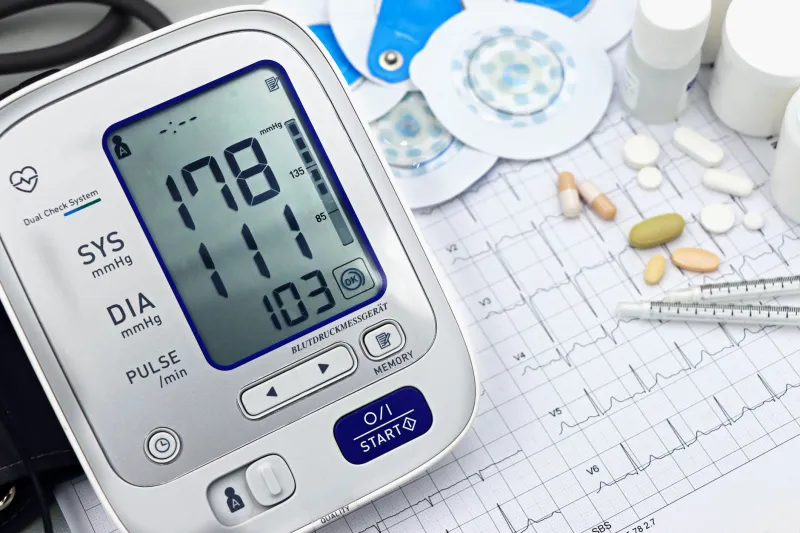
- Blood pressure spikes — including systolic readings higher than before treatment began
- Palpitations and chest discomfort — particularly alarming for patients with existing coronary artery disease
- Tremor, sweating, and anxiety — a rebound adrenergic state that patients often mistake for panic
- Angina or, in severe cases, myocardial infarction — the most serious risk, documented in patients with underlying heart disease whose oxygen demand suddenly outstrips supply
For a healthy 30-year-old taking propranolol occasionally for performance anxiety, rebound is uncomfortable but rarely dangerous. For a patient taking it for angina, arrhythmia, or after a cardiac event, abrupt discontinuation can be life-threatening.
Why the Misconception Persists
American health messaging has trained patients to equate "non-addictive" with "safe to stop." That framing works for many medications but fails for drugs the cardiovascular system has adapted to. A beta-blocker is not a habit — it is a physiological partnership. Ending it should be negotiated, not unilateral.
Complicating matters, many patients in the US receive propranolol for off-label or situational uses — stage fright, migraine prevention, essential tremor — and may run out of refills without a scheduled follow-up. No one warns them, because no one expects them to stop.
The Case for Tapering
Cardiology guidelines consistently recommend gradual dose reduction over one to two weeks, sometimes longer for patients on high doses or with cardiac indications. The goal is simple: let receptor density normalize as drug levels decline, rather than after they do.
A typical outpatient tapering framework — to be set by your physician, never self-prescribed — looks broadly like this:
- Reduce the daily dose by roughly 25% every 3 to 7 days, depending on the starting dose and indication.
- Move from twice-daily to once-daily dosing as the total dose falls, since propranolol's short half-life makes timing relevant.
- Monitor heart rate and blood pressure at home during the taper, ideally each morning before rising.
- Pause or slow the taper if resting heart rate climbs persistently, palpitations emerge, or chest symptoms appear — and contact the prescribing clinician.
- Do not stop short-acting propranolol entirely without a plan if you have coronary artery disease or a history of arrhythmia; in some cases, clinicians transition to a longer-acting agent first.
Patients should also know that rebound symptoms during a proper taper are possible but usually mild. Abrupt cessation is where the serious outcomes cluster.
Questions to Bring to Your Doctor
If you are considering stopping propranolol — because your anxiety has improved, your migraine regimen is changing, or cost and access are issues — bring these questions to your next appointment:
- What was this prescribed for, and is that indication still active?
- What tapering schedule fits my dose, my age, and my cardiac risk profile?
- What heart rate or blood pressure readings should prompt a call?
- How long after the final dose should I expect my baseline to return?
The Bottom Line
Propranolol's lack of addictiveness is a genuine advantage — but it is not a license to stop on a whim. The rebound phenomenon is real, predictable, and almost entirely avoidable with a structured taper and basic monitoring. If you have been taking propranolol daily for more than a few weeks, treat discontinuation as a clinical procedure, not a personal decision made at the medicine cabinet. Your heart has adapted to the drug; give it time to adapt back.