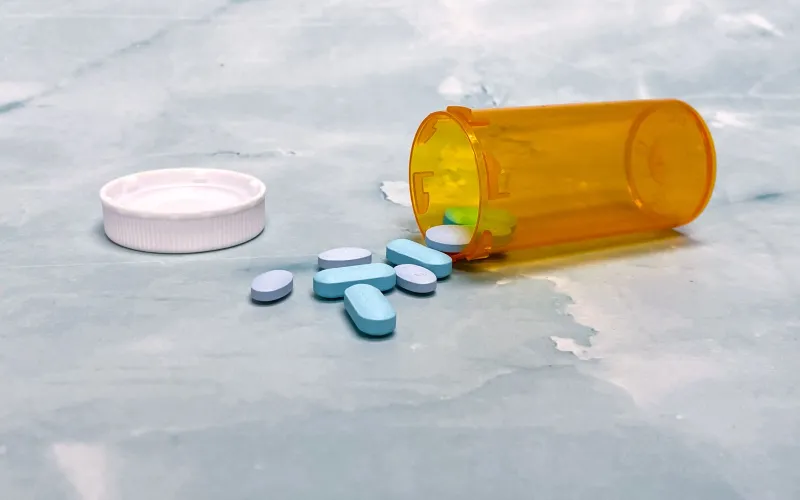
Halves, Quarters, and Unanswered Questions: A Practical Guide to Splitting Propranolol Tablets
Propranolol is prescribed in several strengths, and patients often ask whether they can split a tablet to achieve a dose between available sizes or to make a supply last longer. The question is practical, but the answer is not uniform. A scored tablet, a pill splitter, and a prescriber's approval are not interchangeable with a pharmacist's assessment of the exact product in the bottle. In 2026, as patients compare cash prices and insurance coverage, tablet splitting deserves a careful look rather than a kitchen-table guess.
Why Patients Split Tablets
Cost is one reason. A higher-strength tablet may have a similar retail price to a lower-strength tablet, so splitting can appear to stretch a supply. Dose adjustment is another. Propranolol is used for migraine prevention, essential tremor, performance anxiety, thyroid symptoms, and cardiovascular conditions, and the best dose is not always available as a single tablet. Access can be a third reason: shortages, formulary changes, or travel may make a different strength easier to obtain.
None of those reasons makes splitting automatically safe. A 20 mg tablet split in half is not reliably a 10 mg dose, and an unscored tablet may crumble into unequal pieces. The goal is not to discourage patients from asking about cost-effective options; it is to make sure the tablet in hand is suited to the task.
Scored Versus Unscored Tablets
A score line is a groove pressed into the tablet. It signals that the manufacturer intends the tablet to be broken, but it does not guarantee perfect accuracy. Some propranolol immediate-release tablets are scored; others are not. Different manufacturers may use different binders, coatings, and tablet hardness even when the active ingredient and strength are the same.
An unscored tablet should not be assumed to split evenly. Some unscored tablets are coated, some are very small, and some fracture unpredictably. The label may say not to split the product. The pharmacist can check the specific manufacturer's labeling and compare it with the tablet description on the bottle. That step takes less time than guessing.
Formulations That Should Never Be Cut
Extended-release propranolol products are designed to release medication over hours. Cutting, crushing, or chewing them can cause dose dumping, meaning too much drug is released too quickly. This can produce a sudden drop in heart rate or blood pressure. Capsules should not be opened unless the pharmacist or prescriber specifically instructs it.
Enteric-coated tablets are designed to pass through the stomach intact. Splitting them defeats the coating and can change absorption. Film-coated tablets may be splittable if they are scored and the labeling allows it, but the coating can chip. When in doubt, do not cut. Ask for a different strength, a different formulation, or a pharmacist-prepared alternative.
The Accuracy Problem
Pill splitters are better than knives, but they are not laboratory balances. A splitter can produce halves that differ by 10 to 20 percent or more, especially with small or brittle tablets. Crumbs are lost. The blade may dull. A tablet that splits cleanly on Monday may shatter on Friday.
For some patients, a small difference in dose may not matter. For others, especially those using propranolol for migraine prevention, tremor, or performance anxiety, consistency matters. If the dose must be precise, an oral solution or a different tablet strength is usually a better answer than repeated splitting.
Cost and Access Considerations
Splitting a higher-strength tablet can reduce cost, but only when the prescriber approves and the tablet is suitable. Insurance formularies may cover one strength but not another. Cash prices vary widely by pharmacy and by whether the patient uses a discount card. Patients can ask the pharmacy for cash prices for the prescribed strength and for a higher strength, but they should not change the regimen without the prescriber's agreement.
A pharmacist can also check whether a 90-day supply, a different manufacturer, or a generic alternative changes the price. In 2026, the cheapest option is not always the most reliable one; a formulation that splits unevenly may cost more in lost doses and inconsistent effects.
A Safer Workflow
First, read the label and look at the tablet. Is it scored? Does the label warn against splitting? Second, ask the pharmacist whether this exact product can be split. Third, use a clean pill splitter on a hard surface, not a knife or a fingernail. Fourth, split one tablet at a time and inspect the halves. Fifth, store halves according to the pharmacy's instructions and do not pre-split a month's supply. Sixth, if the halves are uneven or crumbly, ask about a different strength or an oral solution. Seventh, document any dose changes and tell the prescriber.
When to Call the Pharmacist
Call before splitting an unscored tablet, an extended-release product, or any tablet that crumbles. Call if the prescription changes and the new tablet looks different. Call if a child, an older adult, or a patient with swallowing difficulty needs a liquid or a smaller dose. Do not split tablets to create a dose that was never prescribed, and do not use a splitter to stretch a supply without the prescriber's knowledge. The safest split is the one that has been checked before it happens.